
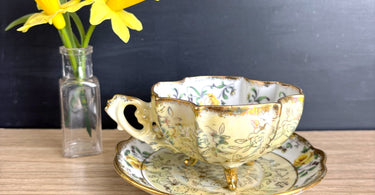
When something has survived on earth for twenty years minimum, no vintage seller wants to be the reason it breaks in transit. And every vintage seller wants to see a review that says "it was well packed." The price of a vintage item has to cover the cost of the item, research and listing time, taking and editing photos, any fees from the selling site and the time to pack and ship it. The whole process is pointless if the piece arrives damaged. With that in mind, here's how we pack a fragile small item for shipping.
We have been accused of overpacking. Guilty as charged. When we were baby vintage sellers, we made mistakes. We had an undertaped box bottom blow out, leaving pieces of a vintage stand mixer scattered across the postal handling facilities of Connecticut. We had a set of glassware arrive as shards because we didn't fill them with paper so there wasn't a void. When we conducted the postmortem, we figured out exactly why it happened and learned from it. As grizzled veterans, we might have one piece break during shipping a year, and the box almost always looks like an elephant sat upon it.
The fragile specimen we're going to demonstrate with is at the top, a vintage Napco teacup and saucer with ornate handle and tiny little feet.

1. Start by filling the void of the cup to prevent the sides from breaking if it's hit.
2. Fussy wrap the fancy handle.
3. Put something to support the tiny feet if they get bumped.
4.Wrap the whole thing in a couple sheets of packing paper like a pound of deli ham.

5. On to the saucer. Again fill the void so when you...
6. ...wrap it like provolone cheese from the deli, it's relatively flat.
7. The two wrapped deli packages.
8. My secret weapon, cardboard inserts from liquor boxes. They're a free, flexible and a sturdy level of protection.

9. The cup and the saucer wrapped in cardboard inserts.
10. Choose a box so whatever fragile thing you are packing will have 2" of space minimum between it and all the sides. Add a layer of crunched paper as a buffer on the bottom
11. Add the cup and saucer, put crunched paper between them and the sides. Don't stuff it too firmly. There needs to be enough looseness so things any bangs on the outside of the box get absorbed by the paper but don't pass straight through to the fragile thing. Finish the box with more crunched paper on top. Seal the box and shake. Nothing should move inside.
12. Add a fragile label, put it in your Ikea bag and take it to the post office.
NOTE ABOUT POSTAGE: If you ship things occasionally and have a small scale with pounds and ounces, you can set up your own account with USPS and print your own postage at a less expensive rate than at the counter.
Hope this tutorial will come in handy if you ever have to pack a small fragile item for shipping.
